
Scuba Diving in Roatan: What You’ll See Underwater (Reef & Marine Life Guide)

Set along the Mesoamerican Barrier Reef, the second-largest reef system in the world, Roatan delivers some of the most rewarding Caribbean reef diving you’ll find anywhere. Warm water, excellent visibility, and an incredible range of dive sites make it a favorite for divers who want both variety and quality. Add in thriving Roatan marine life, and every dive feels like a NatGeo show up close and in person.
Big Marine Life: Turtles, Rays, and Sharks in Roatan
Roatan is known for consistent encounters with iconic marine animals. Sea turtles – green turtles, hawksbills, and the occasional loggerhead – are common sights, often gliding calmly along the reef or resting under ledges. These encounters are a highlight for many divers and a testament to the island’s ongoing conservation efforts.
Rays are another crowd favorite. Southern stingrays can often be found resting on sandy bottoms, while spotted eagle rays soar effortlessly along walls and over deep blue drop-offs. Spotting one mid-dive is always a moment that stops time.
While less frequent, sharks in Roatan do make appearances, especially on deeper walls and quieter sites. Nurse sharks are most frequently sighted, hanging out under overhangs. Hammerhead sightings in Roatan have become much more frequent in past years. These sightings are peaceful and brief, and they’re a strong indicator of a healthy, balanced reef ecosystem.
Do you want a guaranteed shark encounter? See if the Roatan Shark Dive is your vibe.
Reef Favorites: Fish Species in Roatan

Photo by SeaVibes Photography
Life on the coral reef Roatan is anything but quiet. The reef is packed with colorful, familiar faces: angelfish, parrotfish, butterflyfish, and schools of blue tang weaving through coral formations. Groupers, snappers, and barracuda add to the action, while moray eels peek out from crevices.
The sheer diversity of fish species in Roatan is what makes the island’s reefs so engaging. No two dives are ever the same, and there’s always something new to notice.
Small Life & Underwater Photography in Roatan

Frogfish by Martin Cabrera
Slow down and the reef reveals its hidden side. Seahorses, pipefish, cleaner shrimp, nudibranchs, and tiny crabs blend seamlessly into sponges and soft corals. This mix of big encounters and macro details makes underwater photography in Roatan especially rewarding.
Our divemasters are trained to understand the symbiotic relationships between marine species and know just where to look for some of the more inconspicuous creatures.
What You’ll See Night Diving in Roatan
Night dives in Roatan reveal a completely different side of the reef—one that even seasoned divers find unforgettable. As the sun sets, daytime fish retreat into the coral, and nocturnal creatures emerge, transforming familiar dive sites into something new.
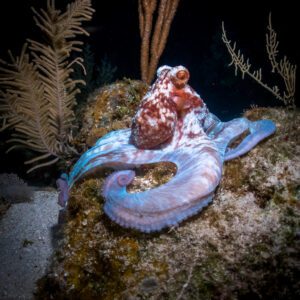
Caribbean reef octopus by Gil Sassi
This is when you’re most likely to spot octopus hunting across the reef, changing color and texture as they move. Spiny lobsters leave their hiding spots to roam the reef, antennae stretched forward, while crabs and shrimp become far more active under torchlight. You may also encounter sleeping parrotfish, often wrapped in their protective mucus cocoons, tucked safely into the reef.
Night dives are prime time for basket stars, brittle stars, and other invertebrates unfurling to feed. Bioluminescence can sometimes be seen in open water – tiny flashes of light called the String of Pearls, responding to movement, adding a bit of magic to the experience.
More than anything, night dives highlight the reef’s full rhythm—showcasing just how diverse and dynamic Roatan’s underwater world truly is.
Healthy Reefs & Conservation Impact
Roatan is home to some of the healthiest coral reefs in the Caribbean. You’ll see majestic elkhorn with their branches spread toward the sunbeams in the shallows. Big, boulder-shaped mountainous star or grooved brain corals. And garden-like plateaus of soft corals swaying with the sea.

Coral restoration in action by Gil Sassi
You might also find yourself wandering amongst one of Roatan’s coral nurseries where this keystone species is propagated by hand, hung on tree-like structures until it grows to a healthy size ready to adhere back to the reef.
Responsible diving, reef-safe practices, and local conservation initiatives play a direct role in protecting this biodiversity and strengthening long-term reef conservation impact. There are opportunities for visiting divers to get involved too.
A Living Reef, Every Dive
From turtles and rays to the smallest reef critters, marine encounters in Roatan are rich, varied, and deeply memorable. This is Caribbean reef diving at its best: alive, balanced, and constantly evolving.
At Sun Divers, we believe every diver becomes part of the reef’s story. When you scuba dive Roatan, you’re not just exploring an underwater world with us, you’re helping protect it, one responsible dive at a time.