
What Three Days at DEMA Taught Us About the Future of Diving
Artificial intelligence underwater, more women entering the sport, and conservation becoming central to the diving experience. Here’s what caught our attention at this year’s biggest dive industry gathering – and what we think it means for the future of diving.
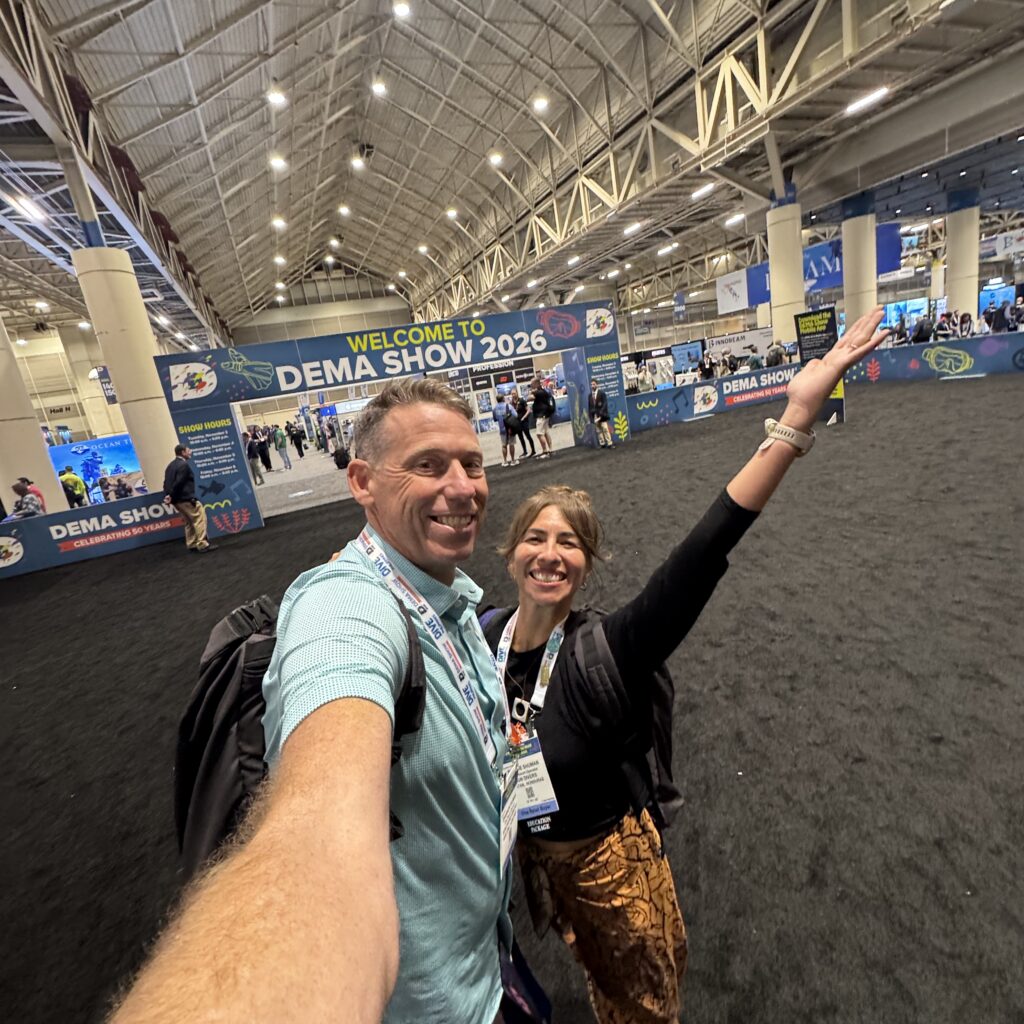
Every year, DEMA brings together the people, brands and innovators shaping the future of scuba diving. It’s an opportunity to see what’s new, spend face time with our industry partners, learn from experts and get a firsthand look at where our sport is headed.
Shannon and I spent three days on the show floor, attending educational sessions and having conversations with people across the industry. And we came away thinking about something bigger than just new gear – even though that was exciting too!
Three themes in particular stood out. Some of these developments are exciting. Some bring up important questions. And some are long overdue discussions.
Here’s what we took away from DEMA 2026:
#1 AI is coming underwater… and we just might like it
Okay…We know… We’re a bit sick of AI too. Especially when it comes to all those “you in the 80s” social media trends and those crappy fliers wasting natural resources.
Plus, isn’t diving supposed to be an escape from technology, constant notifications and the noise of everyday life? So, do we really want AI coming along for the dive?
At DEMA, we had the opportunity to test two emerging products that use technology to enhance the underwater experience, and we came away more impressed than we expected.
Check out the Deeplore Seeker Pro
The Deeplore Seeker Pro takes the idea of a traditional dive computer in a very different direction. Rather than looking down at your wrist, the system integrates a heads-up display INTO a mask, keeping important dive information in your line of sight.
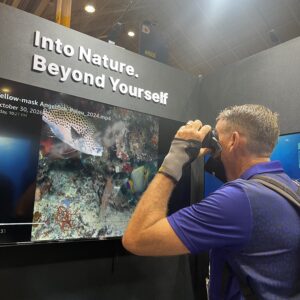
Shannon tests the marine life identification function on the Deeplore Seeker Pro.
But the really caught our eyes is what happens beyond the usual heads-up display dashboard:
The Deeplore Seeker Pro has an AI-powered marine life recognition function that identifies species in real time. In plain speak: as soon as you look at a marine creature, it will be identified in the heads up display – instantly!
We tested this feature on a video screen featuring lots of tropical fish swimming by. And about three out of five times the identification was correct. Demonstrating that there is still some work to do, but the times it got it right were pretty mind blowing.
For those of us who LOVE geeking out on fish identification, this could make your dives a whole lot more interesting and educational.
Other cool features:
- A built-in underwater camera for hands-free, point-of-view photos and video.
- Integrated dive logs that bring together your route, dive statistics, photos and marine life encounters.
- An optional sonar pod that adds tank-pressure monitoring, buddy-separation alerts and preset underwater messaging.
Arex is another company turning masks into what they call a “centralized tactical hub”. This mask + computer is designed to be light weight, and you can add modules such as the Marine ID scanner, air integration and a hands-free dive torch that automatically adjusts brightness based on the environment.
The concept is without a doubt intriguing. But as folks who go underwater to disconnect, we’re still asking ourselves: Is more technology underwater better for us?
Our takeaway on technology: We’re still firm believers that no gadget should distract from situational awareness, good buoyancy, dive planning or the simple joy and utter peace of being underwater.
But if technology can make dive information easier to access, keep us engaged in learning about marine life and capture dive moments in a way that enhances our experience with the ocean world, we’re willing to keep an open mind.
#2 The future is (more) female
At DEMA 2025, I had the privilege of participating in PADI’s “Rising Tides” Community Hour, where I shared our experience connecting more island women to diving through the ROA GIRLS DIVE! scholarship program.
I talked about how, through this program, we sometimes have to address myths about menstruation and diving. But the conversation quickly went deeper. Women in the room began sharing their own experiences in the industry — from misinformation about women’s health and lack of education to issues much more troubling, like misogyny.
What I loved seeing at DEMA 2026 was that PADI took these conversations a step further, turning them into a dedicated Women in Diving workshop, sponsored by Divers Alert Network (DAN). By bringing together industry data and the real-life experiences of women in the room, the workshop helped move the dialogue forward.
One of the most encouraging topics was the growing presence of women in diving.
Katie Thompson, founder of PADI Women’s Dive Day and Executive Director of the PADI AWARE Foundation, has been instrumental in advancing this conversation. And the numbers suggest this is more than a feel-good movement or a marketing trend. Women’s Dive Day is becoming everyday.
The results of PADI’s Women in Diving initiative are worth paying attention to:
- Women now make up 42% of new Open Water certifications. At Sun Divers, that number in 2026 is 47%.
- Since the initiative began 11 years ago, the gender gap among PADI divers has narrowed by 4%.
- The percentage of female dive professionals has grown from 18% to 21%. Those of you who dive with us, know that number is closer to 80%. People ask if it’s intentional. It’s not, but we’re happy to celebrate breaking the industry mold.
These are encouraging signs of a more welcoming dive culture. But the workshop also made it clear that certification numbers alone don’t tell the whole story. Several important challenges still need attention.
Women’s health and diving education
A recent consumer survey shared at the workshop found that more than 50% of respondents felt women’s health was not adequately addressed by the diving industry.
DAN’s Director of the Board also shared research on women’s health and diving. While the research raises important questions, much of the available data is decades old. We have to wonder: what might more current research reveal?
Perhaps most telling, only half of the women surveyed said they felt comfortable discussing these topics with a dive professional. That’s a significant gap and a reminder that better education needs to be part of how we train and develop the people representing our industry.
Equipment designed for women
One of the biggest pain points women in the survey reported experiencing is gear fit, especially when it comes to wetsuits.
Women need equipment designed around their bodies, not simply men’s equipment offered in smaller sizes or different colors. Properly fitting BCDs, wetsuits, harnesses and exposure protection aren’t luxuries. They affect comfort, mobility, confidence and the overall dive experience.
The good news is that more manufacturers are paying attention to fit, function and women’s specific needs.

I’m obsessed with this Bright Buoy Honu Full Frame Silicone Printed Mask.
We especially loved seeing scuba masks from Bright Buoy, molded around women’s face shapes, and available in some pretty cool patterns! Take a look.
Misogyny and misconduct in diving
This is where the conversation takes the fun out of fun diving. An industry cannot call itself inclusive simply because more women are getting certified. Women also need to feel safe, respected and taken seriously.
The personal stories shared at these women-focused events remind us that sexism, inappropriate behavior, harassment and misconduct (from colleagues and customers alike) can still affect women’s experiences in diving. Whether in training environments, on dive boats or in professional leadership, the industry needs clear standards of conduct and meaningful ways to address unacceptable behavior that no one would want their mother, sister, daughter, friend experiencing.
One resource we were glad to learn more about is PADI’s Consumer Protection portal. Divers can use it to share positive or negative feedback about their experiences with dive professionals, evaluate a course, check a professional’s credentials and access consumer alerts.
Our takeaway: The future of diving is absolutely more female. Just look around at Sun Divers! But the next step is making sure the industry creates an environment where women don’t just enter the sport. We want women to thrive in it, advance in it and help shape its future.
#3 Eco Diving is becoming cool
Y’all, we’ve been saying it all along. And now DEMA is too. Identifying as a diver whose also a conservationist is cool.
It’s becoming a bigger part of the conversation around everything from dive travel and underwater experiences to apparel, accessories and the products we use every day.
All we can say, is it’s about time!
At Sun Divers, conservation has been part of our philosophy since the first day we made our little dive shop dream come true. We believe that loving the ocean comes with a responsibility to protect it. That’s why we’ve continued to grow our conservation-focused dive adventures, ocean education and carry more thoughtful product choices on our shelves.
We were encouraged to see seminars for dive centers on how to incorporate eco adventures and sustainable practices into their operations. And it was cool to see how many new products, especially in the apparel space, were promoting being produced with a more thoughtful carbon footprint.
But there’s a catch.
As conservation becomes fashionable, greenwashing becomes a bigger concern.
The number of exhibitors using the word sustainable to sell products or experiences is growing at DEMA every year, but not every offering marketed as environmentally friendly delivers on that promise.
For example, as we look to update our apparel line, we’re digging deeper into the supply chain. We found one conversation with Patrick Rynne, founder of Waterlust particularly helpful in this.
For example, Patrick pointed out that a clothing brand might advertise a shirt as being made from recycled polyester. That’s a positive starting point, but it doesn’t tell us:
- What percentage of the garment is recycled?
- Is the material pre-consumer or post-consumer?
- Can the manufacturer substantiate the claim?
- Is the recycled content independently certified?
- What happens to the garment when it reaches the end of its useful life?
- Were the final product and all its components manufactured by companies following (or going beyond) fair labor practices?
This is where certifications, traceability and transparency become important.
Standards and certifications, such as the PADI Eco Center distinction and the Global Recycled Standard (GRS), give us ways to verify whether brands are backing up their claims. They’re valuable tools for separating meaningful action from clever marketing.
Our takeaway: A product can contain recycled materials and still have a significant environmental footprint. A brand or experience can call itself eco-friendly without doing the hard work to earn that label.
That’s something we’re keeping in mind as we choose the products we’re proud to put our name behind and continue evolving as a dive center and stewards of the ocean. And it’s something worth thinking about as a consumer, too.
Our advice? Be curious, ask questions and look beyond the label.
What does all of this mean for the future of diving?
After three days at DEMA, we’re leaving with plenty of new ideas, but also a few important reminders.
Technology is here to stay and will continue to change how we dive. But it should enhance the experience, and the many benefits we get from diving, rather than take us out of the moment.
More women are discovering the underwater world, but the industry has work to do to make sure they feel supported, represented and (literally) equipped to succeed.
And conservation is becoming a bigger part of the diving experience, which is exactly where we have always thought it belongs. But we need to make sure that environmental responsibility is backed by real action, not just clever marketing.
All of these seemingly here-to-stay trends should be about making diving better. Better for divers, better for the dive community and better for the ocean.
That’s the future we’re excited to be part of!